Air quality
Low dust cat litter for cleaner air at home
Litter dust is a particle-size problem. Fine, light material floats; coarse, heavy material falls. Silica crystals sit firmly in the second category, which is why switching format does more for the air in a small apartment than any amount of careful scooping.
Where litter dust comes from
Three things generate it. Manufacturing leaves a fraction of fine particles in every bag. Handling — pouring, scooping, tipping — throws those particles into the air. And abrasion creates new ones as granules grind against each other while your cat digs.
Only the first is decided at the shelf. The other two are decided by you, which is good news: a lot of the dust in a home is a habit rather than a product.
Why crystals produce less than clay
Clumping clay has to be milled fine. Its whole mechanism depends on small particles swelling around liquid and locking together, and fine particles are exactly the ones light enough to stay suspended in air.
Silica crystals work the opposite way. Absorption happens inside each granule, so there is no reason to make them small. They are coarse and comparatively heavy, they resist crumbling, and when something disturbs the bed they fall back into it rather than rising above it.
What low dust means day to day
A cleaner surface around the box
Most of what settles as a grey film on skirting boards and nearby furniture is litter dust. Reduce the airborne fraction and that film largely stops appearing.
Less on paws, less through the house
Fine powder clings to paw pads and travels. Coarse granules get kicked out of the tray but stay near it, where a mat catches them and a quick sweep finishes the job.
A box you do not have to hide
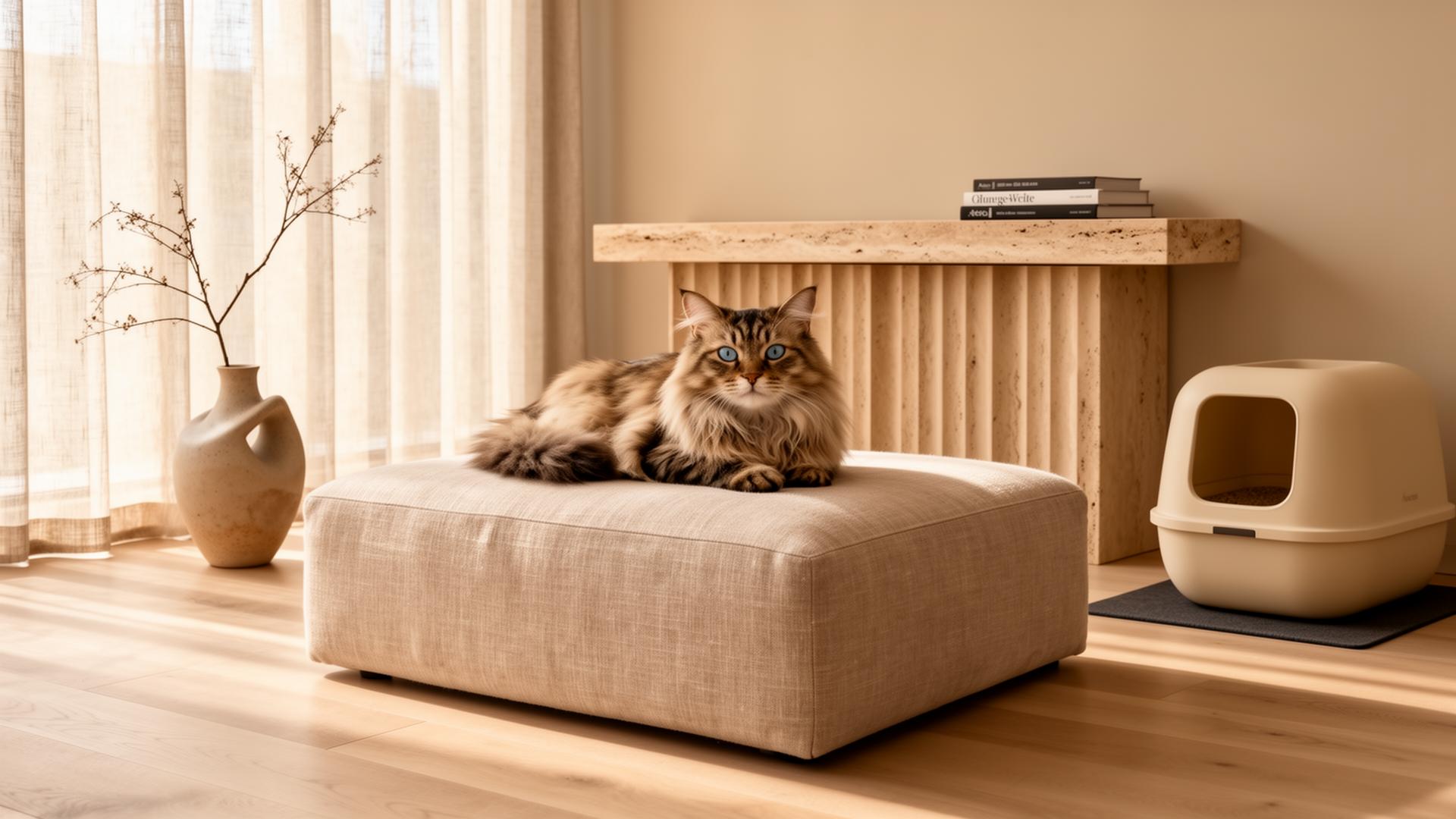
Once dust and odor are both under control, the litter area can live somewhere convenient instead of being banished to the least ventilated corner of the home.
Six habits that cut dust further
- Pour low and inside. Keep the bag mouth below the rim of the tray so any fines land in the box, not in the room.
- Stop tapping the scoop. Knocking a scoop on the rim is the single most reliable way to aerosolise whatever it is holding. Shake it gently inside the box instead.
- Use a high-sided or hooded box. Walls contain both granules and dust while your cat digs.
- Check the airflow. A box positioned in front of a vent, fan or draught turns every visit into distribution.
- Put a mat under it. A ribbed or textured mat collects what leaves the tray before it reaches the floor.
- Empty trays gently. Tip a spent tray into a bag held right against its edge rather than pouring from height.
LitterBetter and dust
LitterBetter™ is a low dust silica crystal litter: irregular translucent crystals in mixed sizes, hard enough to resist crumbling, with no powdered deodorising filler added to the bed. It is designed for apartments where the litter box shares air with the rest of the home.
The 8 lb pouch covers one cat for about a month at $23, or $19 on subscription; the 16 lb pouch covers multi-cat homes at $38, or $32 on subscription. Both sizes are on the shop, and if odor is the other half of your problem, read odor control cat litter.
Frequently asked
- Is any cat litter completely dust free?
- No. Every granular material produces some fine particles through handling and abrasion. Litters marketed as dust free are low dust in practice, and the honest comparison is between formats rather than against zero.
- Why does clay litter create so much dust?
- Clumping clay is milled fine so it binds tightly around liquid. Fine particles are light enough to stay airborne when the bag is poured or the bed is disturbed, which is why a cloud rises above the tray.
- Does low dust litter help with allergies?
- Less airborne litter dust means less irritant in the room, which many people notice. Cat allergies themselves are usually a response to proteins in dander and saliva, not litter, so litter choice reduces one source of irritation rather than treating the allergy.
- What is the fastest way to reduce litter dust today?
- Pour with the bag mouth inside the tray and low, stop tapping the scoop against the rim, and move the box out of the path of a fan or air vent. Those three changes cost nothing and remove most of the visible cloud.
Keep reading
Crystal cat litter, explained
What crystal litter is, how it differs from clay, and what to look for before you buy.
ReadSilica vs clay cat litter
A side-by-side comparison, including where clay is still the better choice.
ReadOdor control cat litter that keeps rooms fresh
Where litter box smell really comes from, and the changes that actually reduce it.
ReadThe litter
LitterBetter™
Premium silica crystals in an 8 lb pouch for one cat ($23, or $19 on subscription) and a 16 lb pouch for multi-cat homes ($38, or $32 on subscription). Free delivery, pause or cancel anytime.