Straight answers
Is crystal cat litter safe?
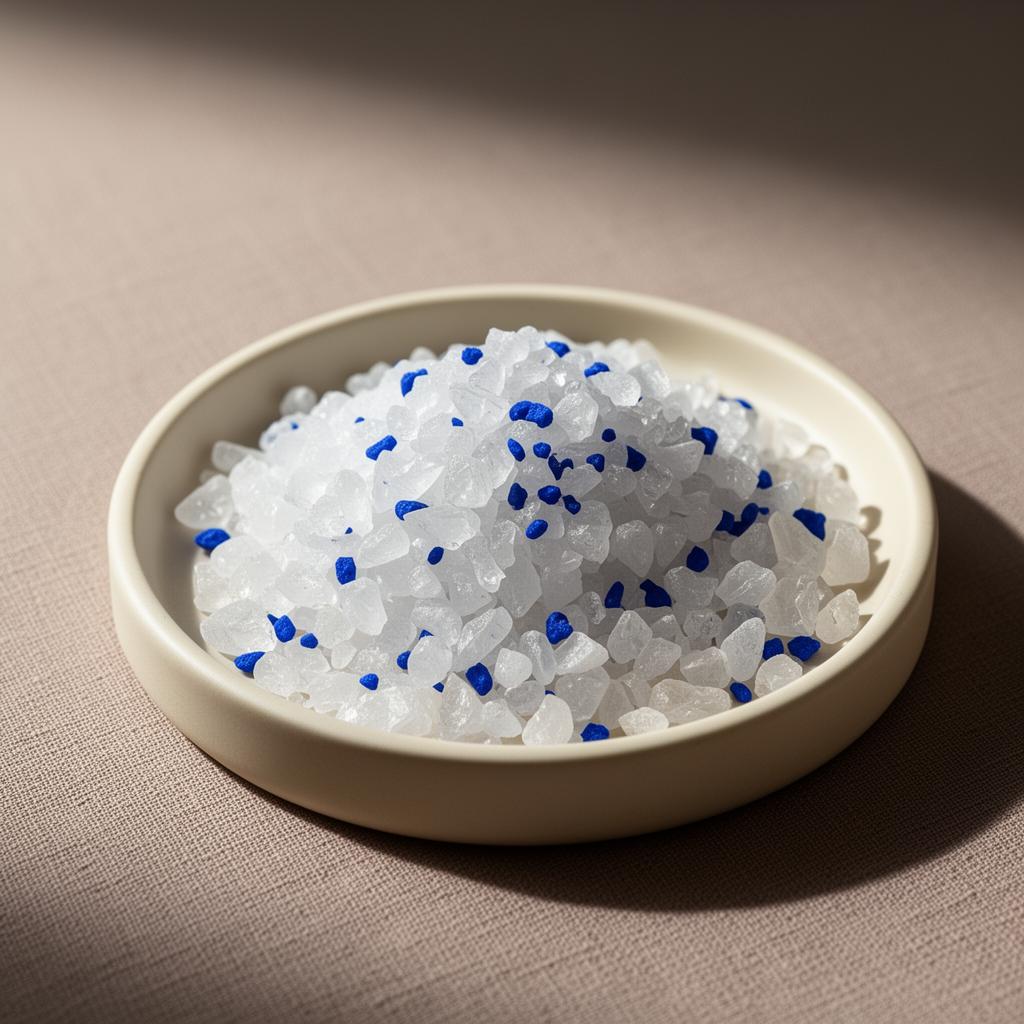
Crystal cat litter is made from amorphous silica gel, an inert, non-toxic material used as a drying agent in food and product packaging. Used as intended it is considered safe for cats, and most worries about it trace back to a genuine confusion with a different form of silica used in industry.
The short answer
Silica gel litter is chemically inert. It does not react with a cat's skin or paws, and it is not absorbed by the body. That is why the same material is packed alongside food and medicines to keep them dry.
What it is not is edible, and it is not designed to be eaten. As with any litter, the sensible position is that a cat should walk on it and dig in it, not consume it.
The silica confusion, cleared up
Search "is silica safe" and you will find serious warnings. They are real, and they are about a different material.
Respirable crystalline silica
This is the fine, sharp-edged dust generated by cutting stone, concrete and sand in industrial work. Long-term inhalation at occupational levels is associated with lung disease, which is why construction sites take it seriously.
Amorphous silica gel
This is what crystal litter is: a manufactured, porous, non-crystalline solid in granules millimetres across. The structure is different, the particle size is different, and it is not the material those occupational warnings describe.
Practically, crystal litter is also among the lower-dust formats to begin with, because the granules are coarse and heavy. More on that in low dust cat litter.
Situations worth thinking about
Kittens
Kittens taste things. Many owners keep young kittens on a fine, soft litter until box habits are solid, then transition to crystals. There is no urgency to switch early.
Cats that eat litter
Deliberate litter eating is a behaviour to investigate rather than manage with a litter swap. It can point to nutritional or medical causes, so it is a conversation for your vet.
Sensitive or declawed paws
Crystals are firmer underfoot than clay powder. Some cats do not care; some clearly prefer something softer. Watch how your cat stands in the box during the first week.
Households with dogs
A dog with access to a litter box will investigate it. A hooded box or a gate is a better answer than changing litter type.
Safe handling and disposal
- Pour with the bag low and inside the tray, and avoid tapping the scoop on the rim.
- Bag used litter and put it in household waste. Silica gel does not biodegrade and should never be flushed.
- Wash trays with unscented soap at each full change, and dry them before refilling.
- Store unopened pouches somewhere dry, since the crystals absorb humidity from the air.
How LitterBetter approaches this
LitterBetter™ is a premium silica crystal litter with no heavy perfume and no powdered deodorising filler mixed into the bed — a shorter ingredient story is easier to feel confident about. If you are weighing crystals against your current litter, the silica vs clay comparison covers the trade-offs, and both pouch sizes are on the shop.
Frequently asked
- Is crystal cat litter toxic?
- The granules are amorphous silica gel, which is not classed as toxic. It is chemically inert and passes through the digestive system rather than being absorbed. Any specific health concern about your cat should go to your vet.
- What happens if my cat eats a few crystals?
- Small incidental amounts are generally passed without incident, though the granules absorb moisture on the way through. If your cat deliberately eats litter, or eats a large amount, contact your vet — persistent litter eating can indicate an underlying issue.
- Is crystal litter safe for kittens?
- Very young kittens explore with their mouths and are still learning what the box is for, so many owners start them on a softer, finer litter and move to crystals once box habits are established. Ask your vet what they recommend for your kitten's age.
- Is it safe around dogs?
- Dogs that raid litter boxes will eat whatever is in them, and crystals are no exception. The material itself is inert, but a dog swallowing a quantity of any litter warrants a call to your vet. A covered box or a baby gate solves the behaviour.
- Is the dust from crystal litter dangerous?
- The health warnings people have read about silica refer to respirable crystalline silica in industrial settings, which is a different physical form from the amorphous silica gel in litter. Crystal litter is also coarse and low dust in normal use. See our low dust guide for handling tips.
Keep reading
Crystal cat litter, explained
What crystal litter is, how it differs from clay, and what to look for before you buy.
ReadHow crystal cat litter works
Absorption, evaporation, the daily routine, and how often to change the whole tray.
ReadLow dust cat litter for cleaner air at home
Why litter dust happens, and how to keep it out of the air in a small apartment.
ReadThe litter
LitterBetter™
Premium silica crystals in an 8 lb pouch for one cat ($23, or $19 on subscription) and a 16 lb pouch for multi-cat homes ($38, or $32 on subscription). Free delivery, pause or cancel anytime.